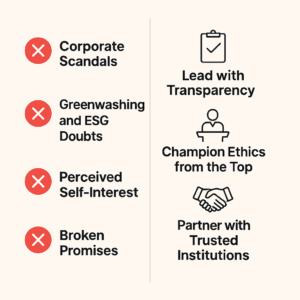
Public trust in business is eroding around the globe. Once regarded as a pillar of stability and progress, the corporate world now finds itself under intense scrutiny. Surveys show that confidence in businesses is lower than in NGOs and scientific institutions. The shift reflects more than public perception — it signals deep dissatisfaction with how companies behave, communicate, and deliver on promises.
In an era of heightened accountability, the question looms large: Can business regain trust — and how?
The Global Trust Gap
Today, businesses are no longer seen as the most trustworthy institutions. While many people continue to support the role of private enterprise in driving economic growth, skepticism is growing — especially in developed economies. In fact, trust in business remains highest in developing nations, while the most advanced economies report widespread doubt about corporate intentions.
Trust in South Africa: An Uneven Landscape
South Africa reflects this trust divide sharply. Business is currently the most trusted institution in the country — far ahead of government and media. But that doesn’t mean companies are in the clear.
In South Africa, people trust their employers more than any other entity. This provides a powerful foundation. However, citizens also feel that businesses too often serve elite interests. The perception that “companies only benefit the wealthy” is widely held and growing.
“South Africa has one of the world’s largest gaps between trust in business and trust in government.”
Why Trust Has Collapsed
Trust is easy to lose and difficult to regain. In today’s environment, the following issues have contributed to the collapse of trust in business:
1. Corporate Scandals
High-profile corporate fraud, corruption, and misconduct have made headlines and shaken public faith.
2. Greenwashing and ESG Doubts
Environmental, Social and Governance (ESG) commitments are under the microscope. Without standardized measurement and transparency, many see these initiatives as PR exercises rather than real change.
3. Perceived Self-Interest
From executive bonuses during layoffs to questionable price hikes, people see too many examples of companies acting for their own gain.
4. Broken Promises
Whether it’s misleading advertising or failure to meet public commitments, broken corporate promises drive distrust.
How Business Can Rebuild Trust
The good news? Trust can be rebuilt — but it requires consistent, ethical leadership and a deep focus on accountability. Here’s how business leaders can start:
1. Lead with Transparency
Be honest, even when the news isn’t good. Publish clear, verified updates on goals, especially around ESG. Avoid inflated promises.
2. Champion Ethics from the Top
Foster an internal culture where honesty, fairness, and accountability are rewarded. Hold all levels of the organization to the same high standard.
3. Partner with Trusted Institutions
Working with NGOs, civil society, and researchers improves credibility. It shows a willingness to be held accountable and act in the public interest.
4. Invest in Employees and Communities
Build trust from within. Treat employees fairly, communicate openly, and invest in the communities where you operate.
5. Respond Quickly to Mistakes
When trust is damaged, delay makes it worse. Admit errors, explain corrective actions, and commit to doing better — publicly.
The Path Forward: From Cynicism to Credibility
People want to trust companies. In fact, trust in employers remains higher than in any other institution. That’s a starting point — but not enough. Stakeholders expect business to be a force for good, not just a machine for profit.
True credibility will come not from slogans or ad campaigns, but from visible, consistent action: ethical decisions, verified results, and authentic community impact.
“Trust is not given — it’s earned, and constantly re-earned.”
We use essential cookies to make our site work. With your consent, we may also use non-essential cookies to improve user experience and analyze website traffic. By clicking “Accept,“ you agree to our website’s cookie use as described in our Cookie Policy.